

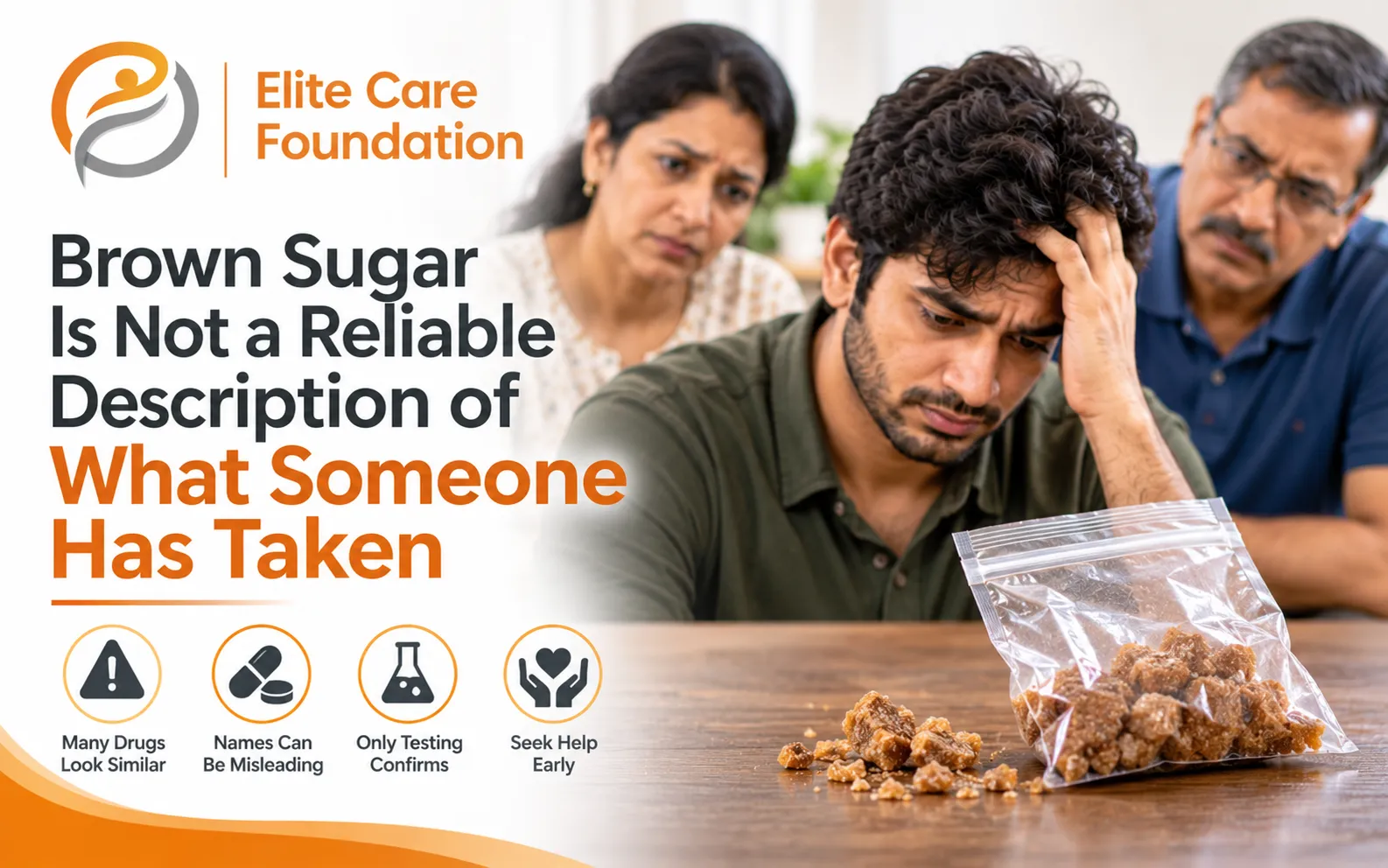
“It was only brown sugar” may be the only explanation a worried friend can offer in an emergency. It is also a phrase that gives a doctor very little certainty. Street names are not chemical descriptions, and a powder’s colour is not a reliable test of what it contains. The safest response depends on the person’s symptoms, not on whether the packet looked familiar.
Brown sugar commonly refers to heroin in India, although actual street preparations can vary. Heroin is an opioid, a group of drugs that can suppress breathing. Unknown strength, unexpected ingredients and the use of alcohol or sedative medicines alongside opioids can all alter the danger. No one can judge potency reliably by appearance or by a seller’s description.
Why yesterday’s dose can be dangerous today
Opioids reduce pain and can produce sedation, but they also affect the brain’s control of breathing. Risk rises when the dose is greater than the body can tolerate, when unexpected potent substances are present or when opioids are combined with alcohol or sedative medicines.
Tolerance is another complication. After a spell without opioids, whether during treatment, imprisonment or an attempt to stop at home, the body may be less accustomed to the drug. Returning to an earlier quantity can therefore be especially hazardous. This is why overdose education and continuing treatment matter after withdrawal symptoms have passed.
According to the World Health Organization’s opioid-overdose fact sheet updated in August 2025, fewer than one in ten people worldwide who need treatment for opioid dependence receive it. This is a global estimate, not a measurement of services in any Indian city. It does reinforce the importance of making effective treatment easier to reach after an emergency.
Breathing matters more than the label
Possible opioid intoxication can involve marked sleepiness, constricted pupils, impaired attention and slowed breathing. However, no single sign proves which drug was used. Withdrawal may involve agitation, sweating, stomach upset, aching and a strong urge to use again. A clinician must ask about other substances and medicines, because several syndromes can overlap.
If a person is unresponsive or breathing slowly, call 112 in India. Naloxone can reverse opioid overdose if available and properly administered, but emergency assessment remains necessary. Someone who wakes after naloxone still requires observation because its effect may wear off before that of the opioid. There is no safe home experiment to establish whether an unknown powder was harmless.
Reading about the brown sugar drug may help relatives understand why an unknown opioid powder demands caution. It cannot confirm what an individual has taken. If they are difficult to wake, breathing unusually slowly or making gurgling sounds, emergency assistance is needed even if nobody knows the substance’s name.
Why treatment starts with better questions
When someone requests an appointment, staff should ask when the substance was last used, whether there have been previous overdoses, what other drugs are taken and whether the person has a history of treatment. They should also ask about mental health, housing, sleep and the people available to provide support. These are not distractions from treatment; they influence what treatment can safely achieve.
WHO recommends evidence-based options for opioid dependence including methadone or buprenorphine when appropriate, together with psychosocial care. The right plan may include supervised withdrawal, but detoxification by itself does not address the longer-term risk of returning to use. Counselling, medication review, follow-up and strategies for handling cravings need attention beyond the first days.
When considering a nasha mukti kendra mumbai, look beyond its admission offer. Ask whether a medical professional can assess opioid dependence, how a patient with an overdose history is managed, whether evidence-based medicines can be arranged where indicated and how ongoing care is organised. A centre should be candid if a hospital or another specialist service is more appropriate.
What to tell the doctor when the contents are unknown
Useful information includes the time symptoms started, any known substance use, prescribed medicines, alcohol use and whether the person has been unconscious or struggled to breathe. Bring packaging or information already available, without handling unknown substances unnecessarily. If a bystander has given naloxone, tell the emergency team. Even a person who looks better may need further observation, particularly if other sedating substances could be involved. Describing observations accurately is more valuable than confidently naming an unverified drug.
Keep the facts separate from the rumours
Relatives sometimes circulate stories about a particular batch of drugs or insist that the person “must have taken” something stronger. Without reliable testing, those claims remain guesses. What the family can describe accurately is the change in behaviour, breathing, consciousness or physical health.
For clinicians, unknown contents demand caution. For families, they demand speed when danger appears and patience when treatment is being arranged. The safest approach neither minimises heroin use nor assumes that every person with a street-drug history requires the same intervention.
A packet may be labelled with a familiar name, but the person in front of you is what matters. Slow breathing calls for immediate action. Once the emergency has passed, a careful substance-use history and a realistic continuing-care plan are far more valuable than guessing what the powder should have contained.